Let’s be honest.
Traditional caller ID is broken.
You see a random 10-digit number on your screen. You have no idea who it is. Or why they’re calling.
Is it a client? A delivery driver? Or another “Limited Time Offer” about your car’s extended warranty?
Usually, you just ignore it.
The result? You miss important calls. And when you do answer, you’re often greeted by a cold robocall.
Truecaller used to be the solution. But it’s become bloated, ad-heavy, and its privacy track record in the US is shaky at best.
People are looking for Truecaller alternatives. But here is the catch: Most “alternatives” are just clones of the same old technology. They show you a name and maybe a spam score.
That’s not enough.
Today, I’m going to show you why a patented technology called FaceCall is the only true successor to the traditional caller ID.
Let’s get started.
Chapter 1: The “Identity Crisis” in Modern Communication
Before we dive into the tech, we need to address a massive problem.
In the US, phone call answer rates have plummeted.
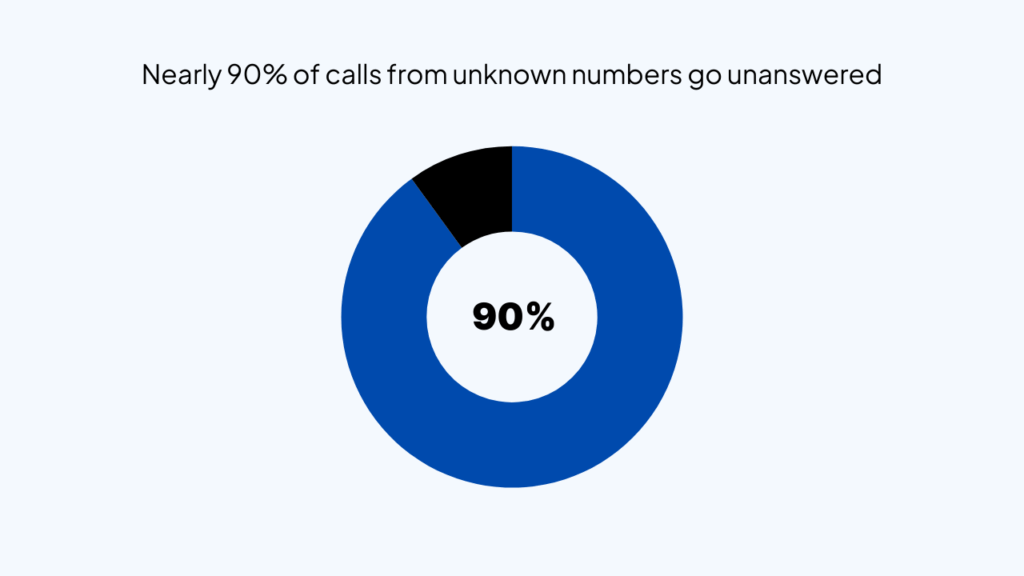
According to recent data, nearly 90% of calls from unknown numbers go unanswered.
Why?
Because the phone has become a source of anxiety rather than a tool for connection.
When your phone rings, you don’t feel excitement. You feel a sense of “What do they want now?”
The Truecaller Failure
Truecaller tried to solve this with a massive crowdsourced database. If someone else labeled a number as “Scam,” you saw it.
But this system has three major flaws:
1. It’s reactive, not proactive. It tells you who not to talk to. It doesn’t give you a reason to want to talk to someone.
2. Privacy. To work, Truecaller needs to “suck up” your entire contact list. For most US users, that is a massive privacy violation.
3. Information Overload. Names aren’t enough. Seeing “John Smith” doesn’t tell you if John is calling about an urgent business matter or just to say hello.
This is where FaceCall comes in.
Chapter 2: What is Video Caller ID?
Imagine this scenario.
Your phone rings. But instead of a static name or a blank screen, you see a 5-second video.
It’s your realtor. She’s standing in front of a house, waving, and says: “Hey! The offer just got accepted, pick up!”
Do you answer that call?
Every single time.
This is the core of FaceCall’s Video Caller ID technology.
It isn’t just a “video ringtone.” It is Visual Intent.
FaceCall is the only company that owns the patent on this specific communication layer. It allows the caller to project their identity and their reason for calling onto the recipient’s screen before the call is answered.
How It Works (The Technical Breakdown)
FaceCall doesn’t rely on a “database of names.”
Instead, it creates a direct peer-to-peer visual handshake.
When you make a call through FaceCall, the app attaches a short “Video Intro” to the outgoing signal.
The recipient’s phone receives this video and displays it instantly.
It turns a “Cold Call” into a “Warm Introduction.”
Chapter 3: Why Visual Context is the Future?
We live in a visual-first world.
We use TikTok for entertainment. We use Instagram for news.
Yet, when we make a phone call, we go back to 1990s technology: audio only.
The psychology of Video Caller ID is simple: Face-to-face communication builds trust faster than anything else.
When you see a name, your brain has to do “work.” It has to remember who that person is and guess why they are calling.
This is called the Anxiety Gap.
Video Caller ID closes that gap instantly.
By seeing the person and hearing a brief snippet of their intent, the “fear of the unknown” is removed.
The result? FaceCall users report answer rates that are significantly higher than the industry average.
Chapter 4: The Core Features of FaceCall
Here is the breakdown of FaceCall’s heavy hitters.
1. The Personal Video Intro
This is the flagship feature.
You can record a “Global Intro” that everyone sees when you call. Think of this as your digital business card.
But the real power is in the Specific Intro.
If you are calling a specific person for a specific reason, you can record a 5-second clip just for them.
“Hey Mark, I’m outside with the documents.”
It takes three seconds to record, but it guarantees the call gets answered.
2. Caller Intention Tags
Sometimes, you don’t need a video. You just need to set the mood.
FaceCall allows you to attach “Intention Tags” to your calls.
- Urgent: For when things can’t wait.
- Quick Question: To signal that you won’t take up much of their time.
- Business: To differentiate professional calls from personal ones.
These tags appear alongside the caller ID, giving the recipient even more context.
3. The “No-App Required” Bridge
This is perhaps the most important feature for the US market.
Usually, communication apps require both people to have the app installed. (Think WhatsApp or Signal).
FaceCall is different.
Because of their patented delivery system, you can send a “FaceCall Link” to anyone.
When they receive your call, the Video Caller ID can play through their mobile browser or through a lightweight integration.
This removes the friction of “Tell your friends to download this app.” You just use it, and it works.
4. AI-Powered Missed Call Recovery
What happens if they still don’t pick up?
With a traditional phone, you leave a voicemail. And let’s be real: nobody checks voicemail anymore.
FaceCall uses AI to transform that missed call.
If the call goes unanswered, the AI can automatically deliver your Video Intro as a “Video Message” to the recipient’s inbox.
It answers the question “Why did they call?” without the user ever having to dial into a voicemail system.
Chapter 5: Why Privacy Matters The Most?
If you’ve used Truecaller, you know their model. They take your contacts, upload them to a server, and map out the world’s social graph.
In an era of high-profile data breaches, that model is dangerous.
FaceCall takes a fundamentally different approach.
1. No Contact Scraping: FaceCall does not require you to upload your entire address book to identify people. Because the identity is provided by the caller (via their video and profile), the app doesn’t need to “guess” who someone is based on other people’s contact lists.
2. Verified Identities: In the US, spoofing is a massive problem. Scammers can make their number look like it’s coming from the IRS or your local bank.
FaceCall’s Video ID makes spoofing nearly impossible.
You can’t “spoof” a live video of a person.
When you see a FaceCall Video ID, you know you are looking at the actual person on the other end of the line.
This is the ultimate “Spam Killer.”
Chapter 6: How to Use FaceCall for Business?
If you are a freelancer, a real estate agent, or a salesperson in the US, FaceCall is your secret weapon.
Here is the framework I recommend for using the app to grow your business.
Step 1: The Trust Build
Most sales calls fail in the first 3 seconds.
Why? Because the recipient is on the defensive. They think they are being sold to.
With FaceCall, you start the “Trust Build” before they even pick up.
Your video should show you in a professional environment, smiling, and looking directly into the camera.
Step 2: The Intent Signal
Use the Intention Tags.
If you are following up on a proposal, use the “Business” tag.
This signals that this isn’t a random robocall. It is a scheduled, professional interaction.
Step 3: The Video Follow-Up
If they don’t answer, don’t just hang up.
Let the FaceCall AI deliver your video intro.
The recipient will see your face and hear your voice. When you call back the next time, you are no longer a “stranger.” You are a “familiar face.”
Chapter 7: The Future of Calling
We are moving toward a world where “audio-only” communication will be the exception, not the rule. This is one of the most important communication trends.
Truecaller and other traditional apps are stuck in the past. They are trying to fix a broken system with more data.
FaceCall is fixing the system with a better human connection.
By owning the patent on Video Caller ID, they have created a moat that other apps cannot cross.
They aren’t just an “alternative” to Truecaller. They are the next evolution of the phone call itself.
The Bottom Line
If you live in the US and you are tired of:
- Being ignored by clients and friends.
- Dealing with endless “Unknown Number” anxiety.
- Having your privacy traded for a “Spam Score.”
Then there is only one choice.
FaceCall is the only platform that gives you the power of patented Video Caller ID.
It’s time to stop calling in the dark.
Download FaceCall and start communicating with intent.