
When we think about “safety,” our minds often go to end-to-end encryption or complex passwords. But for the modern professional, safety also means psychological security.
It’s about creating an environment where the person on the other side of the screen feels comfortable enough to be their authentic self.
If you’ve spent any time reading about essential customer service skills, you know that trust is the ultimate currency.
A “safe” app is one that protects your data, yes. But it’s also one that enables you to “read the room” through a digital lens. It should empower you to practice active listening, manage the conversation’s tone, and establish your identity before the first “hello” is even spoken.
Here is how to choose a 1v1 video call app that actually protects both your data and your relationships.
Let’s start.
1. Prioritize Visual Intent to Build Psychological Safety
Safety begins long before the call is answered.
In the current mobile landscape, the “Unknown Caller” is the greatest source of digital anxiety. When you call someone without identifying yourself, you are essentially asking them to step into a dark room.
That isn’t a safe experience for them. And it isn’t a productive one for you.
This is why the first thing you should look for in a 1v1 video call app is the ability to project Visual Intent.
FaceCall has effectively rewritten the rules here with its Video Caller ID technology. Instead of forcing your recipient to guess who is behind a 10-digit number, FaceCall allows you to send a 5-second video “handshake” that plays while their phone is ringing.
From a service perspective, this is the digital equivalent of a warm smile and a clear name tag. It allows you to:
- Set the Tone: A friendly wave is safer than a blank screen.
- Manage Expectations: You can tell them exactly why you’re calling.
- Reduce Cognitive Friction: The recipient doesn’t have to “solve the mystery” of your identity.
When you can see a live face and hear a brief explanation of the call’s purpose, the recipient’s brain moves from a defensive state to a collaborative one.
This is what we call Psychological Safety. By leading with your face and your intent, you are practicing a high-level service skill: Transparency.
Also Read: Why Video Caller ID is growing in popularity?
2. Demand End-to-End Encryption as a Baseline (Not a Feature)
While we talk a lot about “soft skills,” technical safety is the non-negotiable foundation of any 1v1 interaction.
If you are discussing sensitive client data, medical information, or personal milestones, you need to know that your conversation is a closed loop.
End-to-End Encryption (E2EE) is no longer an “extra”; it is the bare minimum requirement for any app that claims to be professional.
E2EE ensures that the data is scrambled on your device and only unscrambled on the recipient’s device. Not even the app provider (including FaceCall) can see or hear what is being discussed.
Why E2EE Matters for Service Quality:
- Authentic Communication: When you know the “pipes” are secure, you can focus 100% of your energy on the person in front of you.
- Rapport Building: You can dive deep into problem-solving and offer sincere empathy, knowing the session is private.
- Brand Integrity: Choosing an app with a “Privacy-First” architecture shows your clients that you value their digital integrity as much as their time.
In the US, where privacy regulations are becoming increasingly stringent, security is simply an extension of your brand’s commitment to excellence.
3. Look for Low-Friction Accessibility to Ensure Inclusivity
A safe communication tool must also be an accessible one.
If your recipient has to struggle through a 5-minute download process or navigate a maze of “verification codes” just to talk to you, the safety of the interaction is compromised by frustration.
High friction leads to poor communication. And poor communication leads to misunderstandings.
One of the most insightful features you should look for is a Mobile Web Bridge.
FaceCall allows you to call anyone, and your Video Caller ID plays instantly in their mobile browser. From a service perspective, this is a masterclass in Ease of Use. You are meeting the other person exactly where they are—on their phone, in their default browser—without demanding that they change their behavior.
💡Pro Tip: By removing the “Technical Barrier to Entry,” you are creating a safe space for everyone to participate.
Whether you are talking to a tech-savvy Gen Z freelancer or a senior client who is less comfortable with new apps, the experience remains consistent. You are practicing Adaptability, one of the most critical skills in the modern service toolkit.
4. Evaluate the App’s Ability to Provide Visual Context
In a 1v1 video call, so much of our communication is non-verbal.
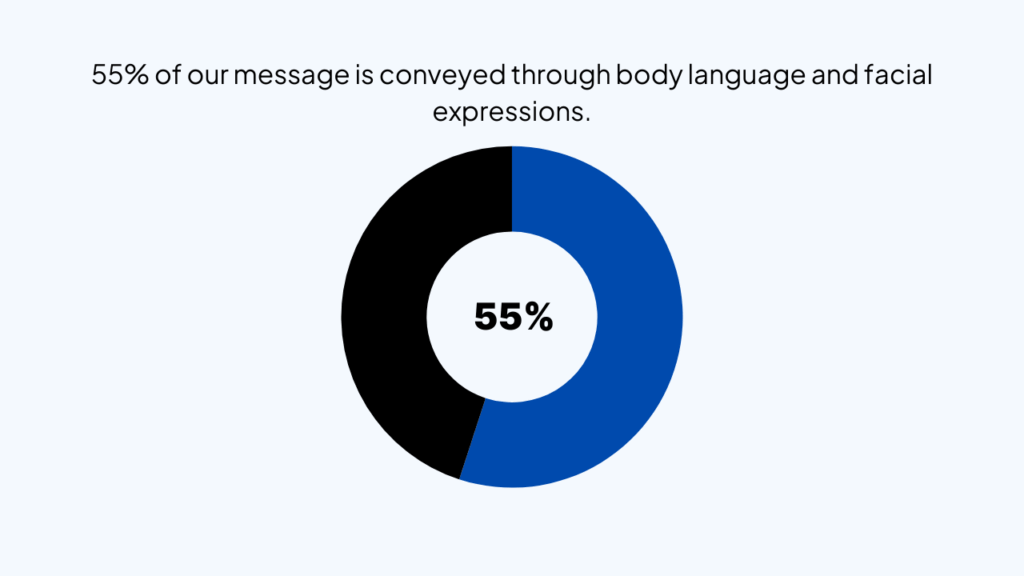
According to communication experts, up to 55% of our message is conveyed through body language and facial expressions.
If your video call app has poor resolution, high latency, or “choppy” video, you are losing more than half of the conversation.
You cannot practice Active Listening if you can’t see the subtle furrow of a brow or a slight nod of agreement.
A safe app in 2026 must provide a high-fidelity visual experience that mimics an in-person encounter. It should use Adaptive Bitrate Technology to ensure:
- Audio Sync: The voice and the lips must stay together to avoid confusion.
- Visual Stability: The video should stay clear even if your 5G signal dips.
- Emotional Nuance: You need to see the cues that tell you when a client is confused or when a friend needs a moment of silence.
Furthermore, FaceCall’s Caller Intention Tags add a layer of verbal context that supports the visual. By tagging a call as “Good News” or “Quick Question,” you are providing an emotional roadmap.
This combination of high-definition visual context and intentional tagging is what allows for Empathetic Communication.
5. Verify the “Post-Call” Integrity of Your Data
Finally, when choosing a safe video app, you must look at how it handles unanswered calls.
Security isn’t just about the live call; it’s about what happens to your identity when the call ends. In a professional US context, leaving a standard voicemail is often a security and productivity dead-end. Voicemails are easily ignored, often transcribed poorly by AI, and lack the emotional context of the original outreach.
A safe app should offer a way to preserve your intent.
FaceCall’s Video ID Preservation ensures that if your call goes unanswered, the recipient still sees a face and a reason – not just a “Private Number” notification sitting on their screen, creating unease.
This is a form of Proactive Service. You are resolving the recipient’s curiosity before it turns into anxiety.
By choosing an app that manages the entire lifecycle of a call – from the initial “Visual Handshake” to the “Visual Missed-Call” – you are investing in a tool that prioritizes the human experience.
How to Make Your Final Choice?
When you set out to choose a 1v1 video call app, don’t just ask, “Is it encrypted?” Ask, “Does it help me be more human?”
- Choose FaceCall if you want to lead with Intentionality and eliminate the anxiety of unknown calls.
- Choose a Privacy-First App if your primary concern is the technical integrity of your data.
- Choose a Low-Friction App if you want to ensure your calls are accessible to everyone, regardless of their tech-savviness.
The most important customer service skill you can have is the ability to make the person on the other side of the screen feel seen, heard, and safe. Your choice of app is the foundation of that skill.
And what better way to be satisfied with your choice than downloading one of the most secure and intent-based communication apps? FaceCall.
Try FaceCall for free now.