Phone calls are still one of the most direct ways people communicate, yet they remain one of the least transparent. When a call comes in, the recipient usually sees a number or a name and is expected to decide whether to answer – without knowing why they are calling.
This lack of context is the real issue behind many problems associated with phone calls today. It leads to missed legitimate calls, unnecessary interruptions, and misuse of the system by bad actors.
Traditional caller ID was never designed to solve this problem fully. It shows information, but it does not establish identity or intent.
Video Caller ID addresses this gap by changing how calls begin.
What Is Video Caller ID?
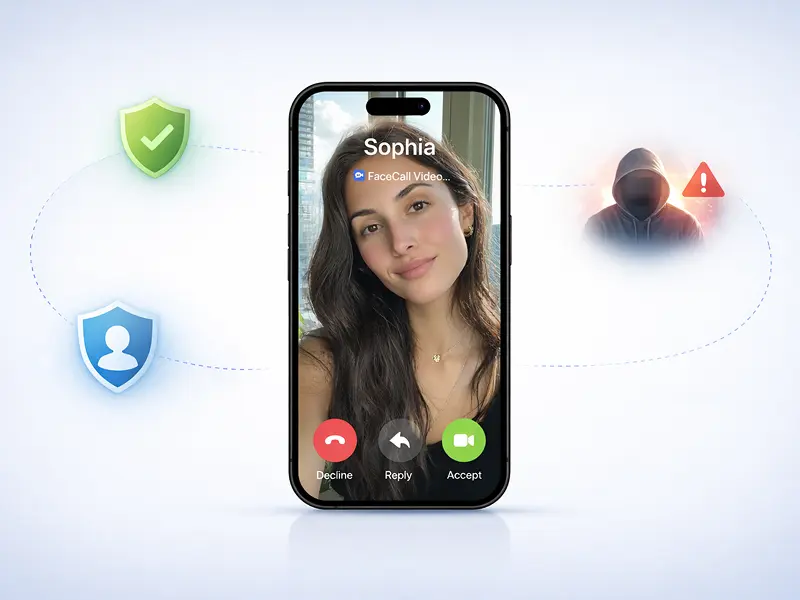
Video Caller ID allows the recipient to see a short, real-time video preview of the caller before answering the call. Instead of relying only on a phone number or contact name, the recipient is shown a live visual introduction from the caller.
This shifts the calling experience from audio-only and assumption-based to visual and context-driven.
Apps like FaceCall use Video Caller ID to make identity visible at the start of a call, rather than after the call is already in progress.
The Limitations of Traditional Caller ID
Traditional caller ID systems display metadata. This usually includes a phone number and, in some cases, a name pulled from a database.
While helpful in some situations, this approach has clear limitations:
- Phone numbers can be spoofed
- Names can be misleading or outdated
- Unknown numbers provide no context at all
Most importantly, traditional caller ID does not explain intent. The recipient has no way of knowing whether the call is personal, professional, urgent, or unnecessary until they answer.
As a result, people either ignore calls they might want to take or answer calls they would prefer to avoid.
Identity vs Information
A key distinction in understanding Video Caller ID is the difference between information and identity.
Information includes labels, warnings, and reputation scores. These are indirect signals that require interpretation. Identity, on the other hand, is direct. Seeing a real person on video provides immediate context that is difficult to fake and easy for humans to understand.
Video Caller ID focuses on identity rather than automated judgment. It does not label calls as safe or unsafe. Instead, it shows the caller and allows the recipient to decide.
This approach aligns better with how people naturally assess trust.
How Video Caller ID Reveals Intent?
Intent is often more important than identity alone. A legitimate call and an unwanted call can appear identical on a traditional caller ID screen.
When a caller appears on video before the call connects, intent becomes clearer:
- A personal call looks personal
- A professional call looks professional
- An unclear or suspicious call is immediately noticeable
This clarity helps recipients make faster and more confident decisions without needing to engage in the conversation first.
How Behavior Changes When Calls Are Visible?
One of the most important effects of Video Caller ID is how it changes caller behavior.
When callers know they will be seen before the call is answered, they tend to be more deliberate about placing calls. Visibility introduces accountability. People are less likely to make unnecessary, misleading, or aggressive calls when their identity is visible upfront.
At the same time, legitimate callers benefit. A real face and clear presence immediately establish credibility, increasing the chances that their call will be answered.
Why Misuse and Fraud Become Less Effective?
Misuse and fraud depend heavily on anonymity and speed. Video Caller ID weakens both.
Because Video Caller ID requires real-time visual presence:
- Automated mass calling becomes harder
- Impersonation attempts are easier to detect
- High-pressure tactics lose effectiveness
This does not eliminate misuse entirely, but it raises the effort required while reducing the likelihood of success. As a result, many bad actors avoid systems that require visibility and accountability.
Importantly, this reduction happens naturally, without aggressive blocking or fear-based warnings.
The Visual Verification Revolution: Video Caller ID
The systemic failure of audio-based verification necessitates a shift to a modality that is significantly harder to spoof and inherently more trustworthy: video.
We stop relying on the numbers. We start looking at the people.
Video Caller ID operates on a simple premise: identity should be visible.
Video Caller ID is a feature that replaces the static, text-based notification of an incoming call with dynamic visual media.
This technology fundamentally alters the power dynamic of the phone call.
In a traditional audio call, the recipient is reactive. They pick up the phone into a void, waiting for the caller to establish the context.
In a Video Caller ID scenario, the recipient is provided with contextual information before they choose to accept the connection. They can see the caller’s face, their environment, and their demeanor.
FaceCall is leading this shift. It is the first video calling app to introduce an AI-powered Video Caller ID that personalizes your calls. When a FaceCall user calls you, they are not just sending a signal; they are sending a video introduction.
You see the context of the call. This changes the psychological dynamic completely.
1. It removes anonymity. Scammers love being faceless voices. Video requires them to show a face. Even if they show a fake face (which we will discuss later), it is infinitely harder and riskier than just hiding behind a spoofed number.
2. It validates intent. The video provides clues that audio misses.
3. It re-engages the “human” brain. Our brains are wired to recognize faces. We are incredibly good at spotting micro-expressions, familiarity, and emotional cues. When you see a face, your brain processes trust differently than when it reads a number.
How FaceCall ‘Also’ Helps End Anonymous Scam Calls?
There are many video apps out there: Zoom, FaceTime, and WhatsApp. But FaceCall is doing something specific that helps with trust. It is not just about chatting; it’s about the pre-call context.
The core feature of FaceCall is Video Caller ID, which lets you see the caller before you answer.
Also Read: Step-by-Step Guide for Users to Create and Customize a Video Caller ID
When you use FaceCall, you are establishing a “Circle of Trust.” You are telling your family, your friends, and your colleagues, “We don’t do anonymous calls anymore.”
FaceCall also emphasizes data privacy. One of the biggest risks with free social media apps is that they harvest your data.
FaceCall’s approach is to provide a clean, paid-quality experience (even if you are using a free tier) that focuses on the connection quality and the identity of the caller, rather than serving you ads.
Furthermore, FaceCall works well on low bandwidth. This is crucial for emergencies. If you are in a bad reception area, you might hesitate to use video because you think it will freeze.
FaceCall is optimized to get that visual verification through even when the signal is not perfect.
How Video Caller ID Works in Real-World Scenarios?
Video Caller ID is not limited to a single type of call or user. Its value becomes clearer when applied to everyday communication scenarios where context matters.
1. Personal Calls
For personal communication, Video Caller ID helps restore confidence in answering calls from unknown or semi-known numbers.
Friends calling from new devices, family members using unfamiliar numbers, or acquaintances reaching out for the first time can immediately establish legitimacy by appearing on video.
This reduces missed connections while still giving recipients control. Instead of ignoring calls due to uncertainty, people can make informed decisions quickly.
2. Professional and Business Calls
In professional settings, Video Caller ID adds clarity to inbound calls from clients, partners, or service providers. A visible introduction signals professionalism and intent, helping the recipient prioritize attention.
Sales calls, support follow-ups, and coordination calls become easier to assess upfront. Legitimate business callers benefit from higher answer rates, while low-intent or poorly prepared outreach becomes less effective.
Why Video Caller ID Is Not Just a Security Feature?
It is important to understand that Video Caller ID is not primarily a security tool. Its primary purpose is better communication.
Security benefits emerge because:
- Identity is visible
- Intent is clarified early
- Anonymity is reduced
However, the core value is improved call quality, not enforcement. This distinction matters because it affects how people use the system. Users are not reacting defensively. They are making informed choices.
This makes Video Caller ID more sustainable and user-friendly over time.
Final Thoughts
The problem with modern phone calls is not simply spam or fraud. It is the lack of context at the moment of decision.
Video Caller ID solves this by making identity and intent visible before a call is answered.
This single change improves trust, reduces misuse, and makes communication more efficient – without relying on aggressive blocking or fear-driven messaging.
As calling continues to evolve, systems that prioritize visibility and user choice are likely to define the next standard.