
The traditional phone call is dying a slow, awkward death.
If you are part of the 87% of Millennials and Gen Z who experience genuine anxiety when receiving a call from an unknown number, you know exactly why.
For decades, the “ring” has been an intrusion or a demand for attention without any context. You see a number, maybe a vague location, but you have zero idea why that person is trying to reach you.
Is it an emergency? A telemarketer? A delivery driver? Or just a friend wanting to chat?
As we move deeper into 2026, the era of the “blind call” is officially ending. We’re seeing a huge shift in personal communication tech, moving away from who is calling and toward why they’re calling. This isn’t just a change in etiquette; it’s a fundamental overhaul of the infrastructure we use to connect.
This transformation is driven by:
- Advances in AI: Smarter systems that can predict and display intent.
- Hyper-fast networks: The bandwidth needed for seamless international video communication.
- Consumer demand for transparency: People want to know the “why” before they answer.
The next generation of communication is visual, intent-based, and deeply human.
Here are the seven trends defining how we will connect in 2026, led by the explosion of Video Caller ID.
1. The Rise of “Visual Intent” (Video Caller ID)
The most significant shift in 2026 is the replacement of static text-based Caller ID with short-form video. For over a century, the telephone has been an audio-first medium. Now, it is becoming video-first, starting before you even answer the phone.
The search volume for “Video Caller ID” and “Visual Calling” has surged by 140% year-over-year, signaling that users are tired of the guessing game.

Here’s what it really means:
- The end of the mystery call
This trend is best exemplified by apps like FaceCall, which have pioneered the concept of “Contextualized Calling.”
The premise is simple but revolutionary: instead of just ringing a phone, the caller records a 5-second “Video Caller ID” intro.
When the recipient’s phone lights up, they don’t just see a name; they see a video loop of the caller waving, pointing to a document, or looking excited.
They see the context immediately. Data shows that people are 4x more likely to answer a call when they can see the person and their intention before picking up.
- Intention Tags
Visual intent goes beyond just the video.
It involves categorizing the nature of the conversation. FaceCall utilizes “Intention Tags” that appear alongside the video. A caller can tag their outgoing call as “Urgent,” “Good News,” “Quick Question,” or “Family.”
This solves the anxiety problem instantly. If you see your partner calling with a “Good News” tag and a smiling video intro, the dread of an emergency vanishes.
If you see a “Quick Question” tag, you know you won’t be trapped on the line for 45 minutes. By 2026, the “why” has become just as important as the “who.”
2. AI-Native Missed Call Assistants
We have all been there: you can’t talk right now, but you don’t want to leave the caller hanging.
In the past, this meant sending a generic “Can’t talk” SMS or letting it go to voicemail – a wasteland where messages go to die.
In 2026, digital clones and AI assistants are taking over the “first touch” of communication.
Instead of a static voicemail greeting, AI-native assistants are now handling missed calls dynamically. Using your synthesized voice and likeness, these assistants can answer the phone, explain why you are unavailable, and—crucially—capture the caller’s intent in detail.
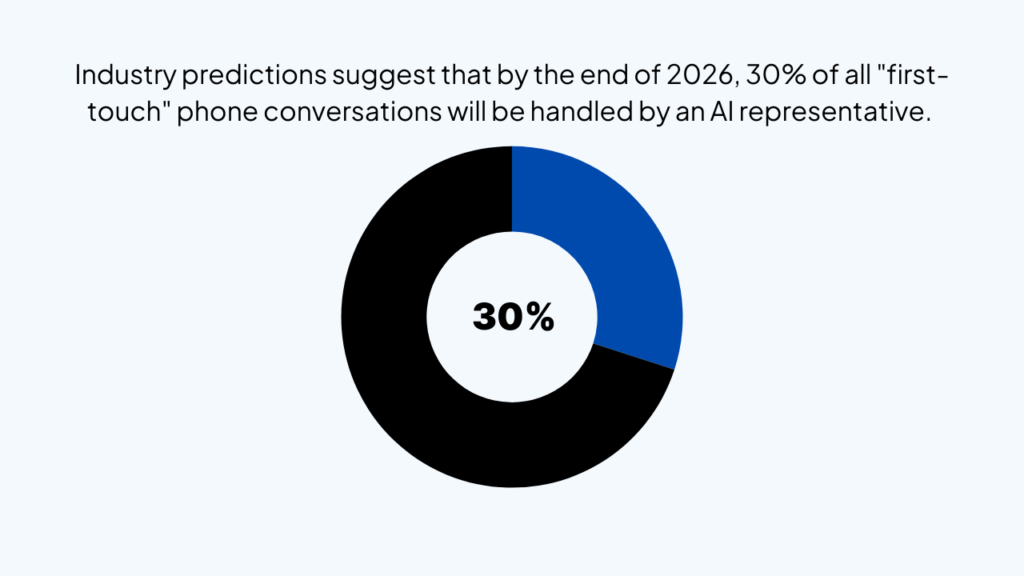
Industry predictions suggest that by the end of 2026, 30% of all “first-touch” phone conversations will be handled by an AI representative.
This isn’t about avoiding connection; it’s about managing bandwidth in a world where we are constantly accessible.
3. Asynchronous Video Messaging Over Sync-Calls
While live calls are becoming more contextual, the preference for asynchronous communication continues to grow.
However, the medium is shifting from text to video. “Video Voicemails” or “Video Bubbles” are rapidly replacing standard audio messages and long paragraphs of text.
The context of body language
Text messaging is efficient, but it is notoriously bad at conveying tone. Sarcasm, empathy, and hesitation are often lost in plain text, leading to conflict. Video restores these human elements.
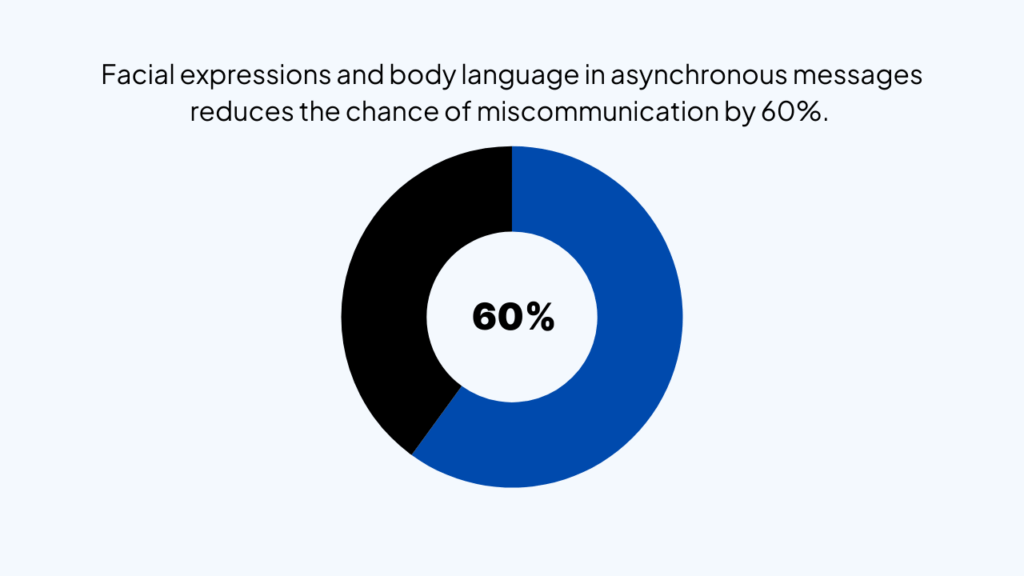
Research indicates that including facial expressions and body language in asynchronous messages reduces the chance of miscommunication by 60%.
Platforms like Telegram and FaceCall have prioritized 1:1 video chats that don’t require both parties to be live simultaneously. You send a video bubble when you have time; they watch and respond when they have time. It combines the emotional depth of a face-to-face meeting with the convenience of an email.
4. Real-Time Language Translation for Voice
For decades, the “Universal Translator” was a sci-fi trope. In 2026, it is a standard feature in high-end communication apps.
The integration of Large Language Models (LLMs) directly into calling architecture has reduced translation latency to approximately 0.5 seconds. This is the threshold where conversation feels natural rather than stilted.
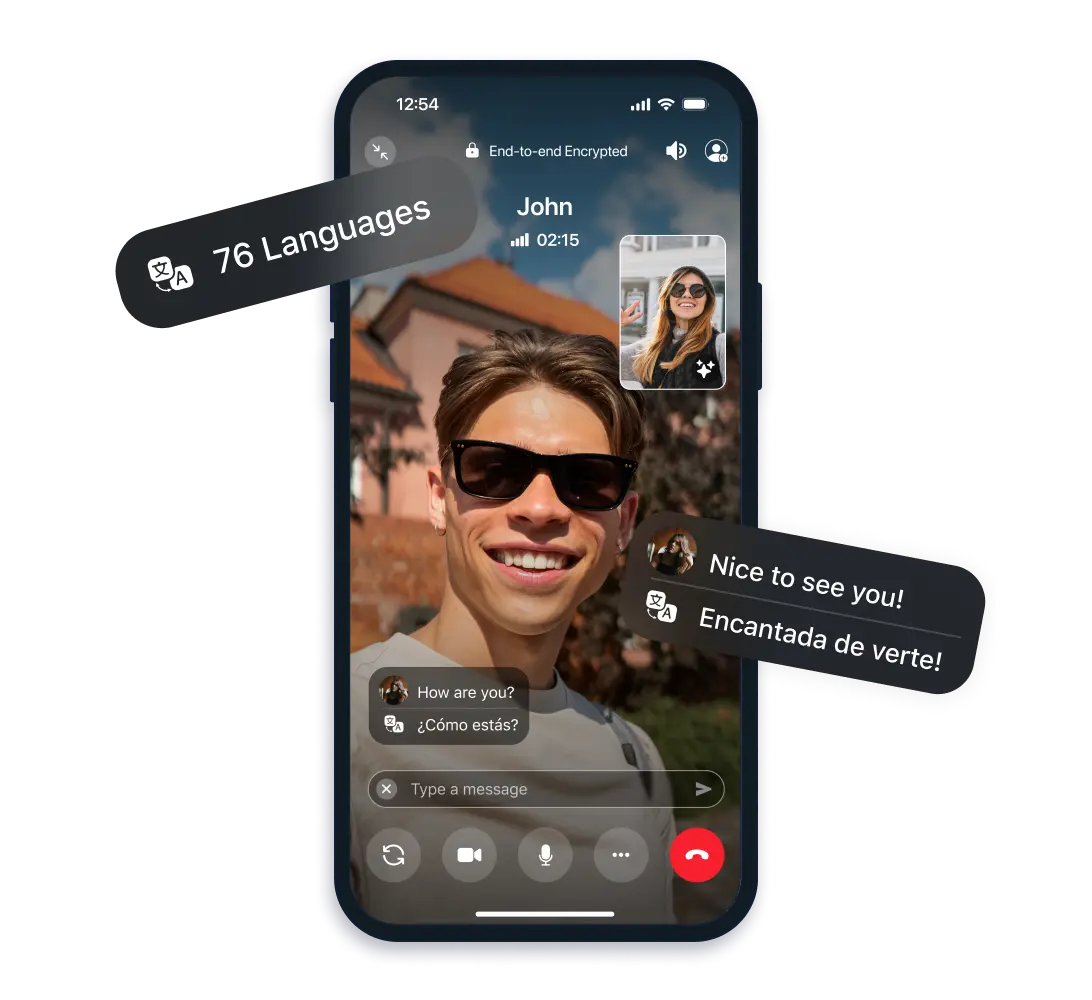
FaceCall’s Live Voice Translation feature allows users to speak in their native tongue while the recipient hears the translated audio (or reads translated subtitles) in real-time.
A project manager in New York can jump on a video call with a developer in Tokyo, and both can speak their native languages with near-zero friction. It is democratizing global communication in a way that text-based translation tools never could.
5. Verified Identity & The End of “Spoofing”
Trust in the telecommunications network hit an all-time low in the early 2020s.
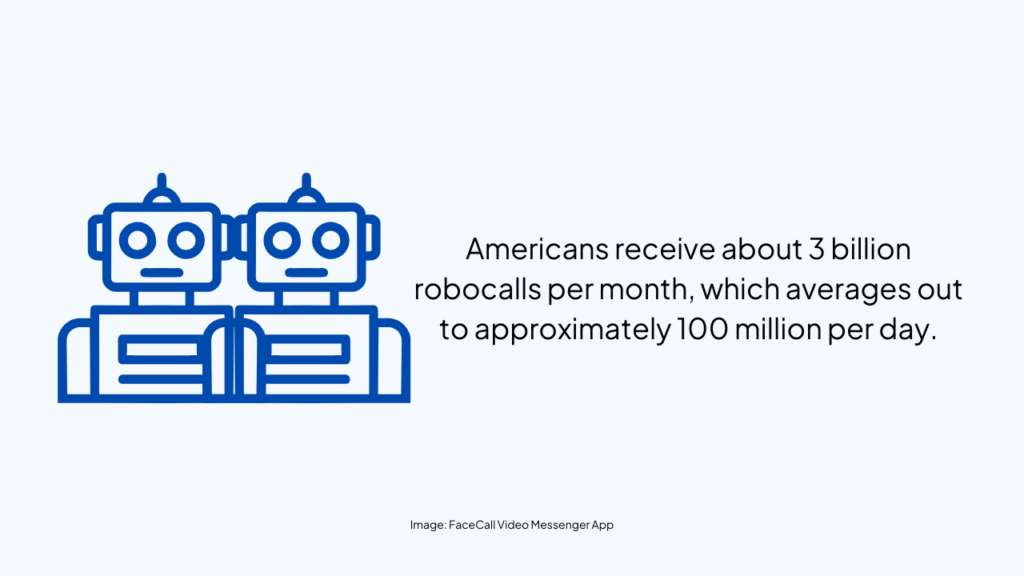
Phone scams cost consumers over $60 billion last year alone, driven by spoofed numbers and robocalls.
In response, 2026 is seeing a massive pivot from “Number-Based” identity to “Identity-Based” verification.
Video as proof
“Identity Theft Prevention” search volume is at an all-time high, and consumers are demanding tools that prove a caller is real. This is another area where Video Caller ID apps serve a dual purpose.
When a call is preceded by a live, unique video intro, it becomes nearly impossible for a standard bot or spoofer to mimic. You aren’t just trusting a string of digits on a screen; you are verifying the human being on the other end.
Apps that allow for verified profiles are becoming the new standard for safety. By moving communication off the traditional carrier networks (which are easily spoofed) and onto encrypted data networks where identity is tied to a user profile rather than just a SIM card, apps like FaceCall are effectively eradicating the “scam likely” epidemic for their users.
6. Spatial Communication & Augmented Reality (AR)
As hardware evolves, so does the software we use to talk. The adoption of wearables like the Apple Vision Pro and Meta Quest has pushed communication beyond the 2D screen.
Calling in 3D
Calls are no longer “held” in the hand; they are “placed” in the room. In 2026, we are seeing the optimization of video assets for spatial environments. When you receive a video call in an AR environment, the Video Caller ID doesn’t just pop up as a flat notification—it can appear as a spatial object, floating in your peripheral vision.

This trend is still in its early adoption phase compared to mobile video calling, but it is driving a requirement for higher fidelity video and spatial audio in communication apps. The expectation is no longer just to “hear” the person, but to feel their presence in the room with you.
7. “Zero-Noise” Privacy & Encrypted Metadata
Finally, the trend toward privacy has evolved. It is no longer just about encrypting the content of the call (the audio and video); it is about protecting the “metadata” – the records of who called whom, when, and from where.
Privacy-conscious users are increasingly moving away from traditional carriers, who often monetize user data, toward End-to-End Encrypted (E2EE) apps.
A major driver of this trend is the ability to communicate without exchanging phone numbers. FaceCall allows users to connect via unique handles or links, meaning you can have a high-fidelity video call with a business associate, a date, or a marketplace seller without ever revealing your personal cell phone number. This “Zero-Noise” approach ensures that your personal data remains personal, even as you expand your social and professional circle.
The Return of the Human Connection
If there is a single theme uniting these seven trends, it is humanization.
For a long time, technology seemed to push us apart. We hid behind text messages, screened calls, and let voicemail boxes fill up. But the trends of 2026 show a reversal. We are using advanced tech – from AI to high-speed video rendering—to make the phone experience “warm” again.
Apps like FaceCall are at the center of this revolution. By prioritizing Video Caller ID and Intent-Based Calling, they are fixing the fundamental flaw of the modern telephone: the lack of context. When you know why someone is calling, and you can see their face before you answer, the anxiety disappears, leaving only the connection.