In 2025, over 92% of consumers reported being wary of unidentified calls, with the majority assuming they are fraudulent or spam.
The telephone call, once the primary method of human connection, is broken.
For decades, we have relied on a technology that hasn’t fundamentally changed since the 1980s. When your phone rings today, you are usually presented with a ten-digit number and perhaps a city name. If you are lucky, you might get a name provided by a carrier database.
But in an era of rampant spoofing and relentless robocalls, a name isn’t enough. We have developed a collective “phone anxiety,” causing us to silence our ringers and let calls go to voicemail simply because we don’t know the context.
So what’s the solution?
A Quick Overview
Traditional Caller ID (CNAM) is a 40-year-old technology that is failing to keep up with modern communication needs.
The solution isn’t just better spam filters; it’s a complete reimagining of the incoming call screen.
Video Caller ID is solving this problem.
A video caller ID is a new visual layer for mobile communication that prioritizes “The Why” over just “The Who.”
This guide analyzes the technology behind visual identity, the rise of intent-based calling, and how video caller ID platforms like FaceCall are setting a new standard for verified communication.
What is Video Caller ID? (The Evolution of Identity)
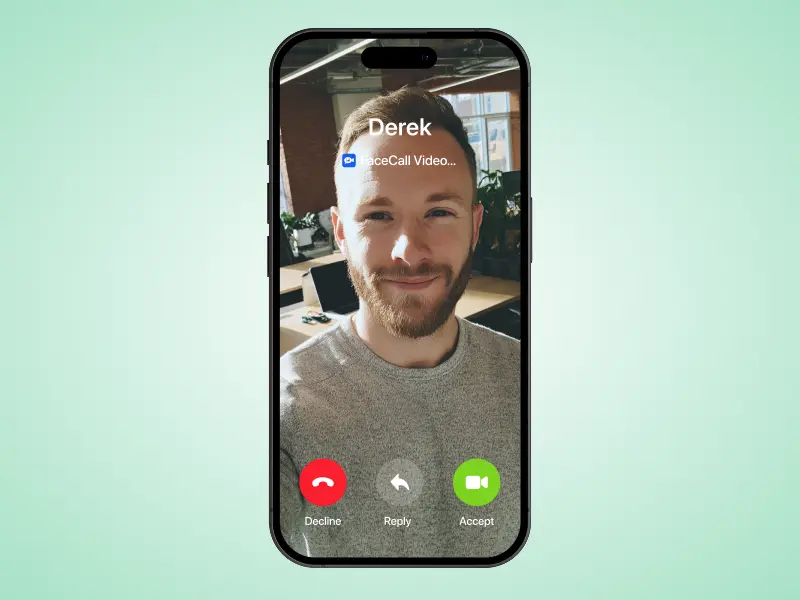
At its core, Video Caller ID is the evolution of the introduction. It moves beyond static text to a short-form video intro that plays on the recipient’s screen during an incoming call.
Instead of a gray screen with a name, the recipient sees a live or pre-recorded video of the caller, instantly establishing identity and mood.
The Growth Curve
As users look for ways to restore trust in their smartphones, the search volume for “Video Caller ID” and “Branded Calling” has spiked significantly in the last year.
Consumers are exhausted by the guessing game. They want visual confirmation before they commit their time to a conversation. This demand is driving a massive shift in how developers and carriers approach the “ringing” experience.
The Tech Shift
To understand why this is revolutionary, we have to look at how we got here.
- Traditional Caller ID (CNAM): This relies on carrier databases that are notoriously slow to update. When a call is placed, the receiving carrier queries a database to find the name associated with the number. This data is often truncated (limited to 15 characters), frequently inaccurate, and easily spoofed by bad actors.
- Modern Video ID (FaceCall): Modern solutions bypass the legacy Public Switched Telephone Network (PSTN) data limitations. Platforms like FaceCall use app-to-app or secure web-link technology to deliver high-definition video and intent instantly.
This isn’t just a video call (like FaceTime); it is a video introduction. Before somebody calls you, they record a short video stating why they are calling in the first place.
The “Why” is the Video: Humanizing the Intent
In 2026, time is our most protected resource. People ignore calls not necessarily because they don’t want to talk, but because they don’t know the urgency or purpose of the interruption.
FaceCall replaces the mystery of the “unknown caller” by making your face your caller ID.
Before the call even connects, you record a short video. By seeing your facial expressions, your surroundings, and hearing your voice for a few seconds, the recipient immediately understands the “Why” behind the call.
Is it an emergency? Are you just calling to share a laugh? Is it a professional follow-up? Your video conveys all of this context instantly, allowing the recipient to prioritize their response based on a real human connection rather than a sterile number.
The Power of the Video Intro
FaceCall allows you to record a short video that plays automatically when you call someone. This serves several critical functions that traditional phones can’t match:
- Instant Trust: You can spoof a phone number, but you cannot easily spoof a live, high-definition video of your face. Video ID acts as a “visual biometric” that verifies your identity instantly.
- Emotional Context: A video conveys mood better than a ringtone. Whether you are smiling, in a rush, or just saying a quick hello, that emotion is transmitted before a single word is spoken in the actual call.
- Memorable Connections: Every call becomes an experience. Instead of a sterile notification, your friends and family see you. It makes calling feel modern, personal, and expressive again.
Key Features of Next-Gen Video Identity Platforms
Video Caller ID is more than just a camera feed. It is a suite of features designed to modernize how we connect.
Here are the standard-setting features found in leading platforms like FaceCall:
1. Visual Profile Intros
First impressions happen in seconds. Users can set a default 5-second video that defines their “vibe” or professional identity.
For a freelancer, this might be a professional greeting in a home office. For a teenager, it might be a funny clip that plays only for their friends. This visual profile travels with the call, acting as a dynamic business card.
2. Real-Time Global Connectivity
The world is shrinking, and our calls are becoming more international. Next-gen platforms are breaking down language barriers.
- Live Voice Translation: FaceCall offers features that allow users to communicate across languages with zero lag. As you speak, the system translates your audio, allowing for seamless cross-border communication.
- Universal Access: One of the biggest hurdles to adoption is the “walled garden” problem (where both users need the same app). FaceCall solves this via web-browser links, ensuring that Video ID works even if the recipient hasn’t downloaded the app yet.
3. Security, Privacy, and HD Quality
FaceCall is built on next-gen technology to ensure that these visual introductions are as smooth as they are secure:
- HD+ Video & Voice: The platform is optimized for fast connections and high-resolution video, even on slower networks.
- End-to-End Encryption: Your videos, your calls, and your identity are protected. Your data stays private and fully under your control.
- Privacy Options: You can choose to use FaceCall with your phone number or connect via a username—your privacy, your rules.
The Anti-Spoofing Shield
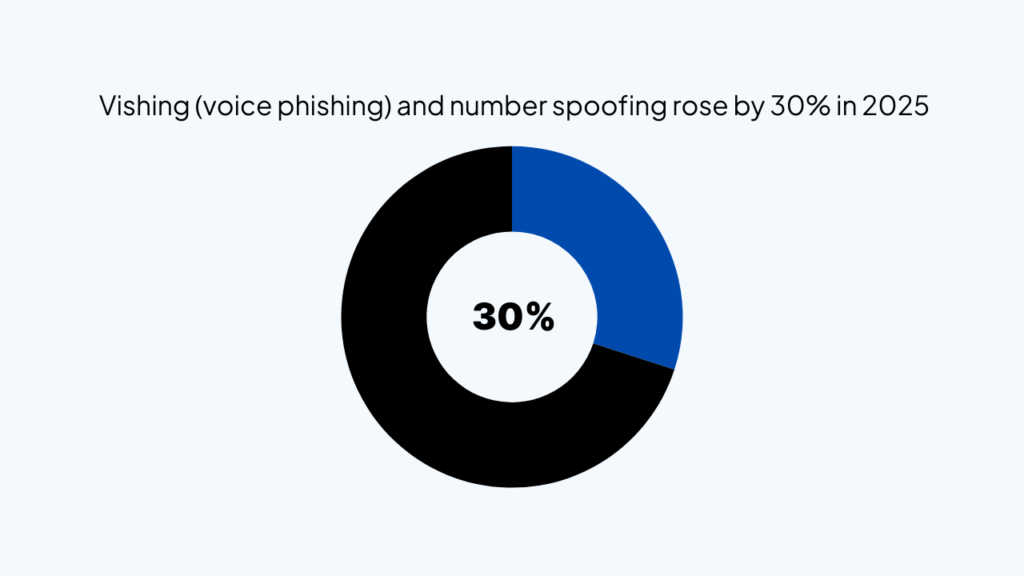
Trust in telecommunications is at an all-time low. Vishing (voice phishing) and number spoofing rose by 30% in the last year alone.
Scammers easily mimic local area codes to trick victims into answering. However, while you can spoof a number, you cannot easily spoof a live, high-definition video of a specific person stating their name and intent.
1. The Video Solution
Video Caller ID acts as a “visual biometric.” When you see the person calling you, verification is instantaneous and intuitive.
If a scammer tries to impersonate your bank, they can fake the caller ID text. But they cannot fake a live video feed of your actual bank representative (or lack thereof). If the video is black or generic, you know instantly to be suspicious.
2. Privacy Standards
With video data comes the need for rigorous privacy. Leading platforms are shifting toward End-to-End Encryption (E2EE).
This means that the video feed and the audio conversation are encrypted on the sender’s device and only decrypted on the recipient’s device. No server, including FaceCall’s, has access to the content of the conversation. In an age of data leaks, this level of security is a non-negotiable requirement for business and personal communication.
Use Cases: Who is Using Video Caller ID?
The adoption of Video Caller ID spans across various demographics, each finding unique value in the technology.
1. The Professional (Freelancers & Coaches)
For gig-economy workers, every missed call is a missed opportunity. Freelancers and consultants are using Video Caller ID to stand out in a sea of “Unknown” calls.
When a potential client sees a professional video intro rather than a random number, credibility is established before the conversation even begins. It turns a cold call into a warm introduction.
2. The Family Unit
Parents and children are using video intros to provide instant visual reassurance. A parent calling a child can use a specific “Urgent” tag combined with a video feed to cut through the noise of a teenager’s digital life.
Conversely, an elderly parent can video call a family member, and the visual confirmation provides peace of mind regarding their well-being before the call is even answered.
3. International Communication
For businesses operating across borders, trust is hard to build over audio. Using Live Translation and Video ID helps build rapport. Seeing the face of a business partner in a different country creates a human connection that email and audio calls simply cannot replicate – making it one of the most ideal options for international video calling.
Conclusion
The traditional phone call is evolving into a “Rich Media” experience. We are moving away from the anonymity of the past 40 years and stepping into an era of radical transparency.
The technology is no longer the barrier; the barrier is our adherence to old habits. But the data is clear: context wins.
The Bottom Line: If a call doesn’t have a “Why,” it’s probably not worth the “Hello.”If you are ready to leave the era of the unknown caller behind, the tools are ready for you. Download FaceCall to join the transition from static numbers to verified visual identity.