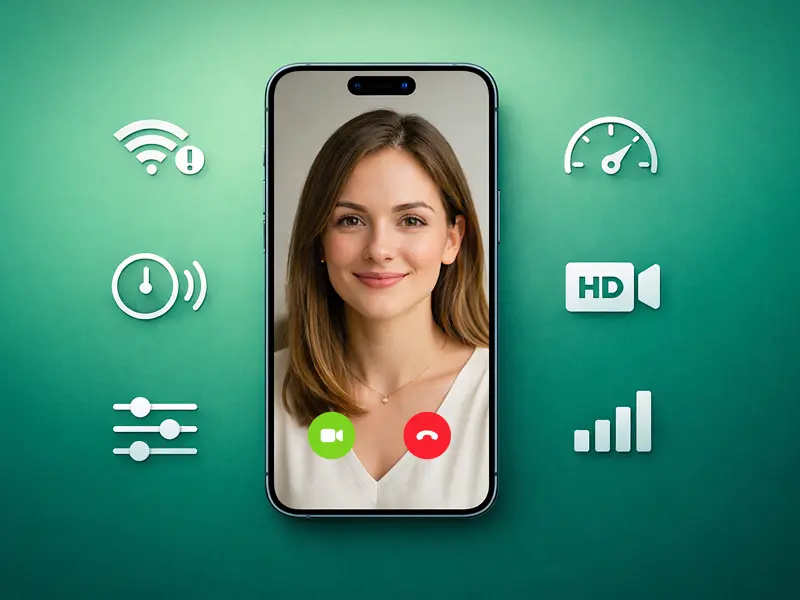
The traditional phone call is in the midst of an existential crisis. For the better part of a decade, answer rates have plummeted. If you call a number that isn’t saved in the recipient’s contacts, the likelihood of them picking up is statistically near zero.
We have collectively trained ourselves to ignore the ring. The mechanism that was once the primary driver of global business communication has become a source of anxiety and annoyance.
The culprit isn’t the smartphone itself, but the lack of context.
A ten-digit number tells you nothing. Even a name on a screen offers no clue as to the intent of the interruption.
This specific friction point is driving the massive adoption of Video Caller ID.
A Quick Overview
Lack of answering calls isn’t just about switching from audio to video calls; it is a fundamental shift in how a call is initiated.
Technologies like FaceCall are leading this charge by introducing “contextualized calling” – providing a visual preview that explains not just who is calling, but why they are calling.
As businesses and consumers look to reclaim the voice channel, Video Caller ID has emerged as the necessary evolution of the telephone. Here is why this feature has become the dominant communication trend as of today.
1. Rapid Decline of Traditional CNAM Accuracy
The Caller Name Delivery (CNAM) database was designed for a different era.
In the landline days, a number was tethered to a physical location and a verifiable billing address. That rigid structure provided a layer of inherent trust.
That trust has completely evaporated. The democratization of VoIP (Voice over Internet Protocol) means that purchasing a phone number (or thousands of them) is trivial and cheap. Bad actors can spoof numbers with ease, making local area codes meaningless.
The “Scam Likely” Fatigue
Carriers attempted to fix this with “Scam Likely” labels or “Verified Business” badges, but these were Band-Aid solutions.
They rely on databases that are often outdated or easily manipulated. By 2025, consumers had developed “notification blindness.” A verified checkmark next to a name no longer guarantees that the person on the other end is who they say they are, nor does it tell you if the call is a critical emergency or a solar panel sales pitch.
Video Caller ID bypasses the legacy CNAM infrastructure entirely.
In fact, it’s a pretty simple method which is more effective than everything else combined.
Instead of relying on a carrier to tell you who is calling based on a database lookup, the verification happens visually. When you see a live or pre-recorded video snippet of the caller, the authentication is immediate and biological. You aren’t trusting a database; you are trusting your eyes.
2. Surge in AI Voice-Cloning and “Vishing” Attacks
The rise of generative AI has created a dangerous new vector for fraud: voice cloning. “Vishing” (voice phishing) attacks have become sophisticated enough to fool even close relatives and bank voice-authentication systems.
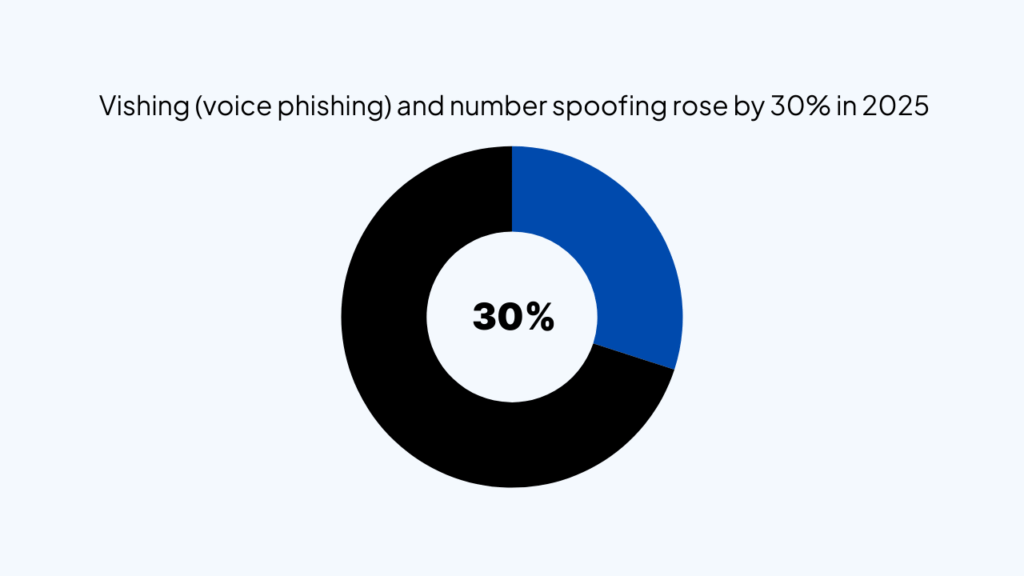
All a scammer needs is a few seconds of sample audio (often scraped from social media) to clone a person’s voice and make a frantic call asking for money.
This security crisis has made audio-only communication a liability. Hearing a familiar voice is no longer sufficient proof of identity.
Visual Verification as the New Standard
Video Caller ID acts as a multi-factor authentication layer for personal communication. Platforms like FaceCall use end-to-end encryption to ensure that the video feed cannot be intercepted or injected with deepfake footage during the handshake protocol.
For businesses, this is critical.
A financial advisor calling a client cannot rely on voice alone. By using Video Caller ID, the client sees the advisor in real-time before answering, neutralizing the threat of AI voice cloning. The visual component provides the “proof of life” that audio can no longer supply.
3. The “Visual Subject Line” for Professional Outreach
This is the most transformative aspect of the trend: the ability to provide context.
Calls were not designed for context. A standard telephone ring is a demand for immediate attention without offering any information in return. It is the equivalent of receiving an email with no subject line and a sender address you don’t recognize. You wouldn’t open that email, yet we expect people to answer those calls.
Contextualized Calling
FaceCall, one of the best video calling apps, has pioneered the concept of the “missing moment” before the connection. This feature allows the caller to record a short video intro or display a visual status that plays while the phone is ringing.
This functions as a “visual subject line.”
- The Sales Context: Instead of a cold call, a representative sends a video preview: “Hi John, I have the quote you asked for regarding the roof repair.” The recipient knows exactly what the call is about.
- The Personal Context: A partner calls with a video snippet showing a flat tire. The recipient knows immediately that this is an urgent situation, not just a casual chat.
By explaining the “why” before the “hello,” Video Caller ID respects the recipient’s time. It shifts the power dynamic, allowing the receiver to make an informed decision about whether to answer, decline, or respond later. This transparency paradoxically leads to higher answer rates because it removes the fear of the unknown.
4. Reducing “Telephonophobia” Among Younger Demographics
For Gen Z and Gen Alpha, the phone call is often viewed as an aggressive intrusion. This phenomenon, often labeled “telephonophobia,” stems from the ambiguity of the medium. A ringing phone signals an unscheduled demand for synchronous interaction with an unknown variable.
Texting became the default mode of communication not just because it is asynchronous, but because it is safe. You can read the message, understand the intent, and craft a response at your own pace.
Bridging the Gap Between Text and Voice
Video Caller ID bridges this gap. It provides the safety of a text message (context and intent) with the efficiency of a voice call.
When a younger user sees a video preview indicating the nature of the call, the anxiety of “who is this and what do they want?” dissipates. It turns the phone call from a “black box” event into a transparent request. By removing the ambiguity, Video Caller ID is rehabilitating the phone call for a generation that had all but abandoned it.’
5. High-Latency Displacement by Low-Latency Video Metadata
Historically, video calling was a separate activity from “phoning.”
You utilized FaceTime or Zoom for a scheduled meeting, but you used the dialer for a quick call. Merging the two was difficult because establishing a high-quality video stream took time and bandwidth, often resulting in a lag before the call connected.
By 2026, improvements in 5G and 6G networks, combined with efficient video compression algorithms, have solved the latency issue.
The Instant Connection
Modern Video Caller ID technology, such as that used by FaceCall, creates a seamless experience.
The video preview buffers instantly, and once the call is answered, the transition to a full encrypted connection is imperceptible.
This technical leap has moved video from a “heavy” feature to a “light” metadata layer. It consumes minimal battery and data to send the preview, meaning it can be always-on. The friction has been removed, allowing video to displace the static image or blank screen that defined telephony for decades.
The Future is Contextual
The telephone number was the primary identifier of the 20th century. The video identity is the identifier of the 21st.
We are moving away from a world of blind communication, where we answer calls based on a guess, toward a world of contextual communication. The rapid growth of Video Caller ID is driven by a simple, universal need: clarity.
In an era of digital noise, deepfakes, and relentless spam, the ability to see who is calling—and why—is not just a feature. It is the only way to restore trust in the most direct form of human connection we have.
Download FaceCall now.